
Trading Crypto
Risk management, strategy, technical analysis, and psychology — for the trader who takes this seriously.
The Reality of Crypto Trading
Crypto markets run 24/7, move on news, sentiment, regulation, and macro factors simultaneously — and most traders lose money, especially beginners. No strategy guarantees profits. Success comes from consistency, capital preservation, and continuous learning — not from chasing home runs. Read every section on this page before you place your first active trade.
Risk Management — The Non-Negotiable Foundation
Risk management is what separates professionals from gamblers. Master it before anything else.
The 1% Rule — Position Sizing
Never risk more than 1% of your total capital on a single trade. On a $5,000 account, that's $50 maximum loss per trade. This keeps a single bad call from doing real damage. Most professionals actually risk 0.5–1%. Risking 5–10% per trade is how accounts blow up.
Stop-Loss & Take-Profit Orders
Set them before you enter — not after. Place your stop-loss below the most recent support for longs (above resistance for shorts). Target a minimum 1:2 risk/reward ratio: risk $1 to make $2. A 1:3 ratio means even a 33% win rate is profitable long-term. If the math doesn't work on paper, skip the trade.
Diversification
Avoid overexposure to any single coin or sector. A common starting framework: ~40% BTC, ~30% ETH, ~30% across alts — with alts spread across different sectors (DeFi, RWA, infrastructure). The more speculative the asset, the smaller the allocation. Never put all your capital in a single position or trend.
Leverage — Proceed With Caution
High leverage (50x–100x) amplifies losses at the same rate it amplifies gains. A 2% adverse move at 50x wipes your position. Beginners: use spot only. Intermediate traders: stay at 2x–5x maximum until you have a provable edge. Leverage is a tool for professionals managing risk, not a shortcut to faster gains.
Portfolio Rebalancing & Hedging
Review your portfolio allocations monthly. When an asset runs hard, trim it back to target — this locks in gains automatically. During high-uncertainty periods, use futures or options to hedge core holdings rather than panic selling. Hedging costs money but protects capital you've already built.
The Trading Journal
Log every trade: entry price, exit price, reason for entry, reason for exit, and your emotional state. Review it weekly. Patterns in your losses reveal your actual weaknesses — not the ones you assume. Most traders who journal seriously see measurable improvement within 3 months. No journal = no feedback loop = no growth.
Trading Strategies
Match your strategy to your time availability, risk tolerance, and experience level — not your ambition.
Long-Term / Passive
HODLing: Buy Bitcoin and Ethereum and hold through full market cycles. Best for people who believe in long-term adoption and don't want to watch charts. Historically outperforms most active traders over 4+ year periods.
Dollar-Cost Averaging (DCA): Invest a fixed amount on a set schedule (weekly or monthly) regardless of price. Removes emotion and timing risk entirely. You automatically buy more when prices are low and less when they're high. Excellent for beginners and as a foundation for any portfolio.
Swing Trading
Hold positions for days to weeks, capturing price swings between support and resistance. Start on the Weekly and Daily charts to identify macro trend, then drop to the 4-hour for entry timing. Risk 1–2% per trade. Crypto swings typically run 2–5 days due to high volatility. Requires checking charts daily but not hourly.
Day Trading
Multiple trades within a single day on 15m–1h charts. Requires significant screen time, fast decision-making, and iron discipline. Transaction fees compound quickly — factor them into every trade. Not recommended until you have 6+ months of successful swing trading behind you. Most day traders underperform a simple DCA strategy.
Scalping
Very short holds (seconds to minutes) on high-volume pairs, profiting from tiny price movements. Needs low fees, fast execution, and deep liquidity. Exhausting mentally and statistically difficult to sustain. Only viable on major pairs like BTC/USDT, ETH/USDT on top-tier exchanges. A beginner attempting this will lose money quickly.
Breakout Trading
Enter when price breaks through a key resistance or support level with strong volume confirmation. Without volume, most breakouts are false. Set entry above the breakout level, stop-loss just below it, target the next major resistance. Watch for fakeouts on low-volume breaks, especially in ranging markets.
Range Trading
When a coin trades between clear support and resistance for an extended period, buy near support, sell near resistance. Use RSI to confirm: buy when oversold near support (<30), sell when overbought near resistance (>70). Exit immediately if price breaks range with conviction — ranges end.
News & Event-Driven
Trade volatility around announcements — ETF approvals, rate decisions, exchange listings, regulatory news. React cautiously: prices often gap instantly and the initial move frequently reverses. Never trade on unconfirmed rumours. If you're not already in position before the news, the opportunity has usually passed.
2025–2026 Focus Areas
RWAs (Real World Assets) and AI agent tokens have attracted significant institutional capital. Bitcoin and Ethereum remain the safest core holdings. Automation — bots for DCA, grid trading, and arbitrage — is increasingly accessible and removes emotional execution errors. ODIN's 16-pillar signal is designed to provide macro-directional context for any of these strategies.
Technical Analysis
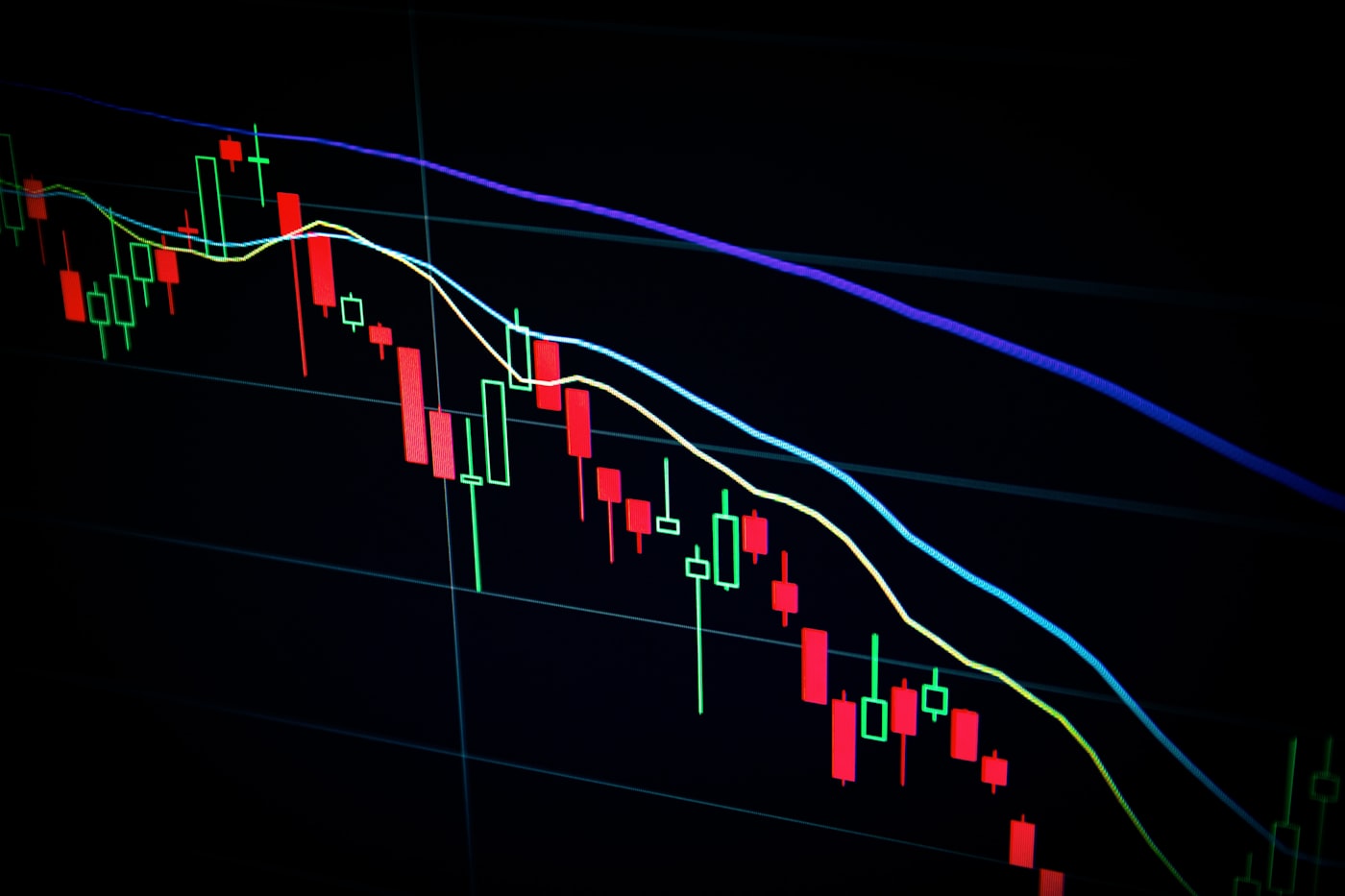
Use TradingView for charting. Combine indicators — never rely on any single one alone.
Crypto Fear & Greed Index
A real-time sentiment gauge. Extreme fear = potential buying opportunity. Extreme greed = time for caution. The contrarian rule: be fearful when others are greedy, and greedy when others are fearful.

Moving Averages (MA / EMA)
Identify trend direction and momentum. The Golden Cross (50 MA crossing above 200 MA) is historically bullish; the Death Cross is bearish. The 21 EMA is widely used for short-term trend confirmation. Price above the 200-day MA = long-term uptrend. Trade in the direction of the higher timeframe MA.
RSI (Relative Strength Index)
Measures momentum on a 0–100 scale. Above 70 = overbought (potential reversal). Below 30 = oversold (potential bounce). More powerful when divergence appears: price makes new highs but RSI makes lower highs — a classic bearish divergence. Best used on Daily and 4H timeframes for confirmation, not entry timing alone.
MACD
Tracks trend direction and momentum shifts. A bullish signal when the MACD line crosses above the signal line; bearish when it crosses below. Histogram bars show the strength of divergence. Best for confirming trend direction — combine with RSI for higher-probability setups. Lagging indicator: it confirms, it doesn't predict.
Bollinger Bands
Three bands: middle (20-period MA), upper and lower (2 standard deviations). When price touches the lower band after a downtrend, it may be oversold. When it rides the upper band, the trend is strong. A Bollinger squeeze (bands contracting) signals low volatility building toward a major move — direction unknown until the breakout.
Support & Resistance
Key price levels where buying and selling pressure historically converge. Support is a floor; resistance is a ceiling. When price breaks through resistance with volume, that level often flips to support. Round numbers ($50K, $100K BTC) and previous all-time highs act as powerful psychological levels. Build your trade plan around these levels.
Volume & Order Flow
Volume confirms price moves. A breakout on low volume is suspect — a breakout on 3×+ average volume has conviction. Watch for high-volume candles at key levels: they reveal where large players are active. On-chain exchange flow data (available in ODIN) shows whether whales are moving coins to exchanges (bearish) or to cold storage (bullish).
Trading Psychology & Discipline
Emotions destroy more accounts than bad analysis. This is the hardest part — and the most important.
The Written Trading Plan
Write down your rules before you trade: which setups you take, which you skip, your maximum daily loss limit, your position sizing formula. When you're in a losing trade, emotions take over — your written plan is the only thing that overrides them. If it's not written, it doesn't exist.
FOMO & Revenge Trading
FOMO (Fear Of Missing Out) is one of the most reliable ways to buy a top. If you feel urgency to enter a trade because "it's moving right now," that's FOMO — not analysis. Revenge trading after a loss is equally destructive: you're not trading the market, you're trading your emotions. Both lead to larger position sizes at worse prices.
The Cooldown Rule
After any loss that hits your maximum daily limit, stop trading for the rest of the day. After a significant loss, wait 24 hours before trading again. Use that time to review the journal entry objectively — was it a bad setup, a bad execution, or just bad luck? Only return when you can answer that question calmly.
Process Over Outcome
A good trade can lose money. A bad trade can make money. Judge yourself on whether you followed your plan — not on the P&L of any single trade. Professionals focus obsessively on process. If your process is sound and your risk management is solid, the edge compounds over time. Losses are tuition.
Practical Tips from Experienced Traders
Security First
Keep only active trading capital on exchanges — move everything else to cold storage immediately. Use 2FA on every exchange account (authenticator app, not SMS). Never share your seed phrase or API keys. Hardware wallets from the manufacturer directly only. One wallet for storage, a separate one for active trading.
Paper Trade First
Before risking real money, run your strategy in a demo or paper account for at least 30 trades. Track everything as if it were real. If you can't be profitable paper trading, you won't be profitable live trading. TradingView's paper trading feature is free and has realistic order execution.
Taxes & Records
In Canada, every crypto trade is a taxable event (capital gain or loss). Track cost basis, trade date, and proceeds for every transaction. Tools like Koinly or CoinTracking connect to exchanges via API and generate tax reports automatically. Don't wait until tax season — stay current throughout the year.
Automation & Bots
Automated bots for DCA, grid trading, and signal-based execution remove the emotional variable entirely. They execute your rules precisely, at any hour, without hesitation. Start with a simple DCA bot before moving to strategy bots. ODIN's signal data is designed to be easy to feed into your own self-hosted automation — ODIN itself does not execute trades on your behalf.
Partial Profits
Instead of all-or-nothing exits, sell portions on the way up. A common approach: sell 25% at 1.5× target, another 25% at 2× target, and let the remainder ride with a trailing stop. This locks in gains while keeping exposure to a continued move. Most traders who hold for "full target" or nothing end up giving profits back.
Avoid Scams
There are no guaranteed signals, no risk-free arbitrage bots, and no insider groups that consistently beat the market. Fake ICOs, phishing sites, and "too good to be true" yield platforms are everywhere. If someone is offering guaranteed returns, they are lying. DYOR — Do Your Own Research — on every platform, token, and person before sending money.
Put It All Together With ODIN
ODIN's 16-pillar composite signal aggregates technical, on-chain, macro, and sentiment data into a single conviction score — updated every 15 minutes. Use it as the macro context layer for any of the strategies above. When the signal aligns with your technical setup, you have more data points supporting your analysis.
Open ODIN Dashboard →Cryptocurrency trading involves substantial risk of loss. You may lose some or all of your invested capital. Past performance is not indicative of future results. Nothing on this page constitutes financial advice — it is educational content only. Always conduct your own research and consult a qualified financial professional before making any investment decisions. Only trade with money you can afford to lose entirely.