
New Investor On-Ramp
Getting started with Bitcoin doesn't have to be complicated.
A Word on Price Predictions
Anybody can make a price prediction — so ignore them. Everyone has a 50/50 chance of being right. Focus on your own research, your own timeline, and your own risk tolerance.
Start With What You Know
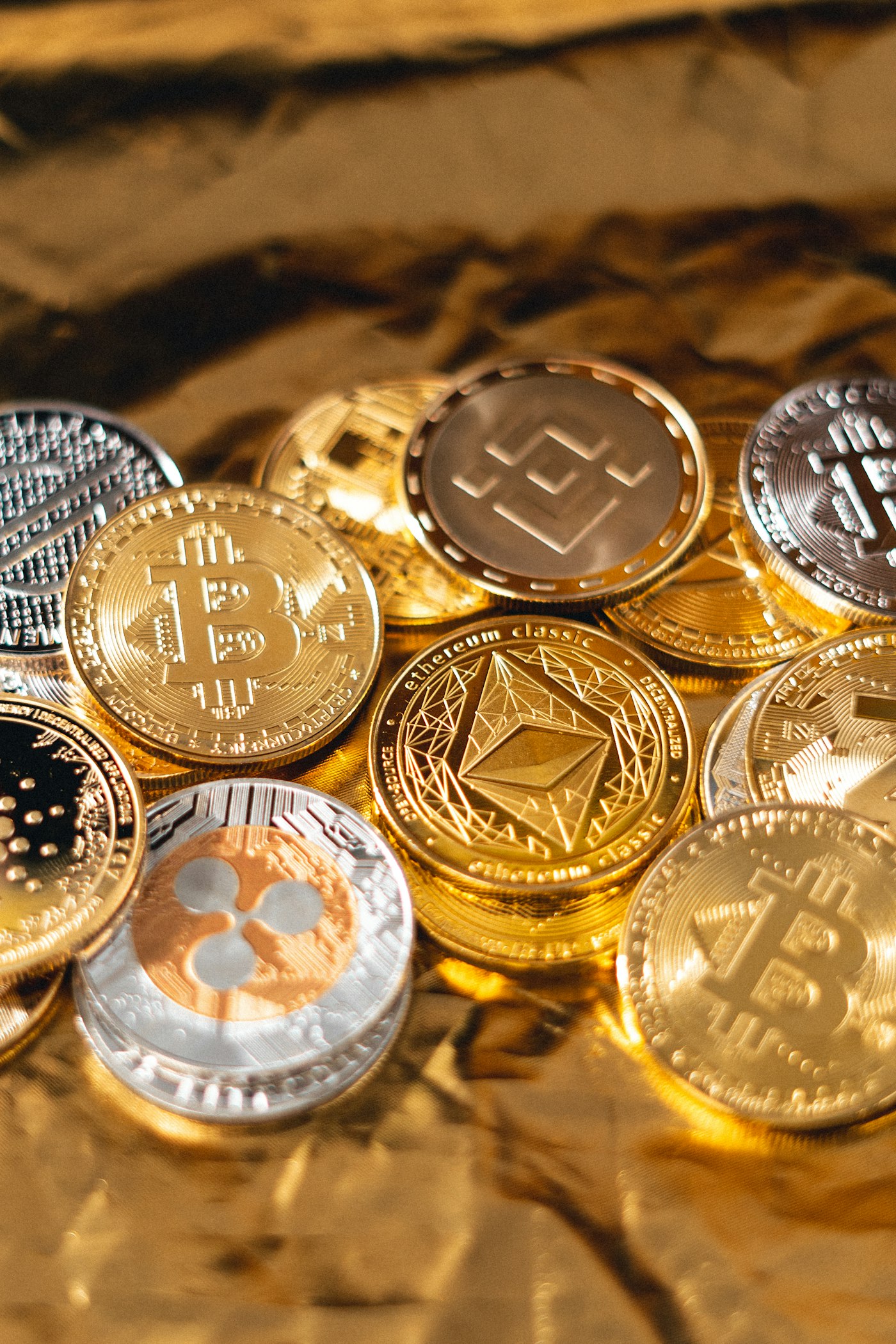
Your first crypto purchase should come from the top 50 by market cap. Bitcoin has the longest track record, the deepest liquidity, and the strongest fundamentals. Once you understand it, the rest of the landscape becomes much easier to navigate.
You don't need to buy a whole coin. Bitcoin is divisible to 8 decimal places — the smallest unit is called a satoshi (0.00000001 BTC). Even $50 gets you into the market.
Step 1 — Choose an Exchange
Research any exchange or on-ramp carefully before using it. Ask: Is it regulated? Are you legally permitted to use it in your jurisdiction? Is it insured for custodian services? What are the fees? What asset pairs are available? Is it crypto-to-crypto only, or does it support fiat on-ramps? Are there minimums for transfers or withdrawals?
Step 2 — Verify Your Identity
KYC (Know Your Customer) is required on most exchanges. Have your ID ready and complete verification before you need to trade.
Step 3 — Make Your First Purchase
Your first crypto purchase should come from the top 50 by market cap — and research it before you buy. Start small — even $50 gets you into the market. You don't need to buy a whole Bitcoin.
Step 4 — Secure Your Bitcoin
Move your Bitcoin off the exchange and into a personal wallet immediately after purchasing. Not your keys, not your coins — exchanges are not long-term storage.
Dollar Cost Averaging (DCA)
The simplest and most effective long-term strategy: invest a fixed amount on a fixed schedule (weekly or monthly) regardless of price. DCA removes emotion and timing risk entirely — you automatically buy more when prices are low and less when they're high. Most active traders underperform a disciplined DCA approach into BTC and ETH over a 4-year cycle. Start here before considering anything else.
Risk Management
Only invest what you can afford to lose completely. Bitcoin has historically had 70–80% drawdowns from peak to trough — be mentally prepared for that before you invest a dollar. For active trading, never risk more than 1% of your capital on a single trade. Diversify across assets (e.g., 40% BTC, 30% ETH, 30% alts) and review allocations monthly. Rebalance when one position grows disproportionately large.
Where Canadians Buy Crypto
Four exchanges. Four very different philosophies. Here's where each one wins, loses, and what it costs.
Shakepay — The On-Ramp
Beginner-friendly Bitcoin-first app from Montréal. Buy BTC/ETH/USDC, earn daily sats by shaking your phone, and spend crypto with a BTC-back Visa.
Est. 2015 · Montréal Assets: BTC / ETH / USDC
Fees: 0% commission + 0.5–2% spread Reg: FINTRAC · CIRO
Newton — The All-Rounder
Toronto-built brokerage with 60–100+ coins, staking, and free Interac deposits. The natural upgrade for anyone who's outgrown BTC-only.
Est. 2018 · Toronto Assets: 60–100+ coins
Fees: 1.0–1.6% spread Reg: FINTRAC · CIRO
Kraken — The Veteran
Since 2011. Simple and Pro interfaces covering 500+ assets, staking, margin and futures. The serious choice when fees and liquidity actually matter.
Est. 2011 · San Francisco Assets: 500–660+
Fees: Pro from 0.25/0.40% Reg: FINTRAC · OSC
GMX — The Frontier
A decentralized perps DEX on Arbitrum & Avalanche. No KYC, no custodian, up to 100× leverage. Thrilling, technical, and genuinely risky.
Est. 2021 · On-chain Assets: Majors + synths
Fees: 0.05–0.10% on perps Reg: None (DeFi)
Exchange Profiles
A deeper look at each platform — what it costs, how it's secured, and who it's actually for.
Shakepay
What it is
A simple, unintimidating on-ramp from Canadian dollars into crypto. No order books, no charts — just buy, sell, hold, and occasionally shake your phone. It's less an exchange, more a crypto-flavoured savings app.
Standout features
- ShakingSats. Shake your phone daily for a small free Bitcoin reward. Builds the habit of stacking.
- Shakepay Visa. Prepaid card that pays up to ~2% BTC cashback on everyday spending.
- CAD interest paid in BTC (up to ~3% during promotions) and $0-spread recurring buys after a short cooldown.
- Lightning Network supported for fast, near-free BTC withdrawals.
Fees, honestly
Shakepay advertises 0% commissions and free CAD deposits/withdrawals — true, but revenue comes from a buy/sell spread of roughly 0.5% to 2%+. Fine for occasional buys; expensive if you trade often or in size.
Security & regulation
Registered as an MSB with FINTRAC and — as of January 2025 — a CIRO Investment Dealer, the first Québec-based crypto platform to clear that bar. Most assets sit in insured cold storage via third-party custodians. No major hacks in its history.
Canadians new to crypto who want a fun, low-friction way to buy Bitcoin, earn small rewards, and maybe spend with a BTC-back card. If you need altcoins or active trading, keep scrolling.
Newton
What it is
A clean, brokerage-style Canadian platform in the sweet spot: wider coin selection than Shakepay, simpler than Kraken. Newton focuses on buying, swapping, holding, and staking — not advanced trading.
Standout features
- 60–100+ cryptocurrencies including BTC, ETH, USDC, SOL, LTC, ADA, DOGE and a long tail of altcoins with multi-chain withdrawals.
- Crypto-to-crypto swaps and staking on eligible assets baked right in.
- Signature Program — higher-volume users get lower spreads (as low as ~0.5%).
- Covers up to $5 of network fees on your first daily crypto withdrawal for many assets.
Fees, honestly
Commission-free, spread-based. Roughly 1.00–1.15% on BTC/ETH/USDC, 1.25–1.45% on SOL/LTC-tier assets, and up to 1.50–1.60% on smaller alts. Shown before you confirm — refreshingly transparent, but not built for high-frequency trading.
Security & regulation
FINTRAC-registered, OSC as principal regulator with CSA reach across provinces. Newton was admitted as a CIRO Investment Dealer effective around March 2026. Roughly 80% of assets in insured cold storage. No platform-wide fund losses on record.
Canadians who want broader crypto access without learning order books. The natural next step after Shakepay for anyone curious about altcoins, staking, or simply wanting one clean app to cover most of their portfolio.
Kraken
What it is
One of the oldest exchanges still standing, with two very different front doors: a simple app for instant buys, and Kraken Pro — an institutional-grade platform with order books, charting, margin and futures.
Standout features
- 500+ cryptocurrencies with deep liquidity on the majors and strong CAD pairs.
- Staking on 20+ assets — flexible and locked, on-chain where possible.
- Kraken+ subscription (~$5/month) waives trading fees on up to $10–20K monthly simple-interface volume.
- Quarterly Proof-of-Reserves audits, passkey/FIDO2 support, global settings lock.
Fees, honestly
Simple mode charges ~1% plus a spread (all-in often 1.5–2%). Kraken Pro starts at 0.25% maker / 0.40% taker, decreasing with 30-day volume. Once you're doing real volume, Pro is usually the cheapest of all four platforms.
Security & regulation
No major customer fund losses in 15+ years. A 2024 non-customer bug-bounty incident was contained and funds recovered. Registered as an MSB with FINTRAC (Payward Canada Inc.) and operating as a Restricted Dealer under the OSC and broader CSA framework.
Intermediate-to-advanced Canadians who want deep liquidity, real trading tools, and a long security record. The most credible "one account for everything" option — simple buys, Pro trading, staking, all under one roof.
GMX
What it is
A decentralized perpetuals and spot exchange running on Ethereum Layer-2s. No account, no KYC, no custodian — you connect a wallet and trade. Pricing comes from Chainlink oracles; liquidity comes from multi-asset GM Pools that replace traditional order books.
How it works
- Trading. Spot swaps and perpetual futures on BTC, ETH, major alts, plus gold and silver synthetics. Zero price impact on supported pairs thanks to pool-based execution.
- Liquidity providing. Supply to GM Pools and act as counterparty to traders — earning 60–70% of trading fees.
- GMX staking. Stake the GMX token to earn a share of protocol fees (historically paid in ETH on Arbitrum or AVAX on Avalanche).
- 2026 tokenomics shift. Staking rewards paused until GMX reaches ~$90, with fees redirected to treasury, buybacks and incentives.
Fees & access
Trading fees of ~0.05–0.10% on position opens/closes. Swap fees ~0.2–0.8%. Layer-2 gas is typically under a dollar. For Canadians there's a catch: no direct CAD rails. You buy crypto on Kraken/Newton/Shakepay first, bridge to Arbitrum or Avalanche, then trade.
Security & risks
In July 2025, GMX V1 was hit by a ~$42M reentrancy exploit in the GLP pool contract. Most funds (~$40M+) were returned via a white-hat agreement. V2 and the core token were unaffected. Even so: smart-contract risk, liquidation risk, and wallet-security risk are entirely on you. There is no CIPF, no customer support desk, no reversal button.
+ Pros
- True self-custody — platform insolvency risk is zero
- Up to 100× leverage with oracle-based, zero-slippage execution
- Real yield from actual trading fees, not inflationary emissions
- Permissionless and available globally, Canada included
− Cons
- Steep curve: wallets, bridging, L2s, liquidation mechanics
- Smaller asset universe than Kraken — majors only
- Proven smart-contract risk (2025 hack), evolving tokenomics
- No CAD on-ramp; support is Discord, not a phone number
Experienced users comfortable with wallets, Layer-2s and DeFi risk who want high-leverage perps, oracle-priced spot swaps, or real yield from LPing and staking. Complements a Canadian CEX — it doesn't replace one.
Side by Side
All four platforms on one screen — no marketing copy.
| Shakepay | Newton | Kraken | GMX | |
|---|---|---|---|---|
| Style | Mobile on-ramp | Brokerage app | Full exchange | Decentralized DEX |
| Assets | BTC · ETH · USDC | 60–100+ coins | 500–660+ coins | Majors + synths |
| CAD rails | Interac · Wire | Interac · Wire | Interac · Wire · EFT · Cash | None (indirect) |
| Trading cost | 0.5–2%+ spread | 1.0–1.6% spread | Pro: 0.25/0.40% · Simple: ~1% + spread | 0.05–0.10% (perps) |
| Advanced trading | No | No | Yes — Pro, margin, futures | Yes — up to 100× perps |
| Staking / yield | BTC rewards, CAD interest | On eligible assets | 20+ assets | LP fees, GMX staking* |
| Custody model | Platform (insured cold) | Platform (~80% cold) | Platform (cold + PoR) | Self-custody |
| Regulation (CA) | FINTRAC · CIRO | FINTRAC · OSC · CIRO | FINTRAC · OSC Restricted Dealer | None |
| Known incidents | None | None | 2024 bug bounty (recovered) | 2025 V1 exploit (mostly recovered) |
| Beginner friendly | ★★★★★ | ★★★★☆ | ★★★☆☆ | ★☆☆☆☆ |
* GMX staking rewards paused in 2026 until token hits ~$90; fees redirected to treasury and buybacks.
Which One Is Right for You?
Find the scenario that sounds like you.
A Practical Stack for Most People
You don't have to pick one. Most experienced Canadian users run two or three in parallel, each doing what it does best.
On-Ramp with CAD
Use Shakepay or Newton for fast Interac deposits. Or Kraken if you want everything in one place from day one.
Trade & Hold
Kraken Pro for real volume or wide asset selection. Newton for staking on a simple interface.
Go On-Chain (Optional)
Bridge to Arbitrum or Avalanche and use GMX for leveraged perps or real-yield LPing. Hardware wallet strongly advised.
The Fine Print
This is editorial content, not financial advice. Crypto involves real risk — price volatility, smart-contract bugs, regulatory shifts, and the permanent possibility of user error. Canadian residents should be aware of CRA tax rules: crypto trades, staking rewards, and even bridging between chains can be taxable events. Start small, use 2FA, and consider a hardware wallet for anything you can't afford to lose. Details reflect publicly available information as of 2026 and are subject to change without notice.